Oxygen and emergency equipment
Two cylinders feed the crew masks, the passenger masks and a therapeutic outlet through one valve unit, the EPAV. Around them sits the emergency kit: smoke goggles, PBE, fire extinguishers, a crash axe, flashlights and life vests.
Open the slidesThe system
Where the oxygen comes from
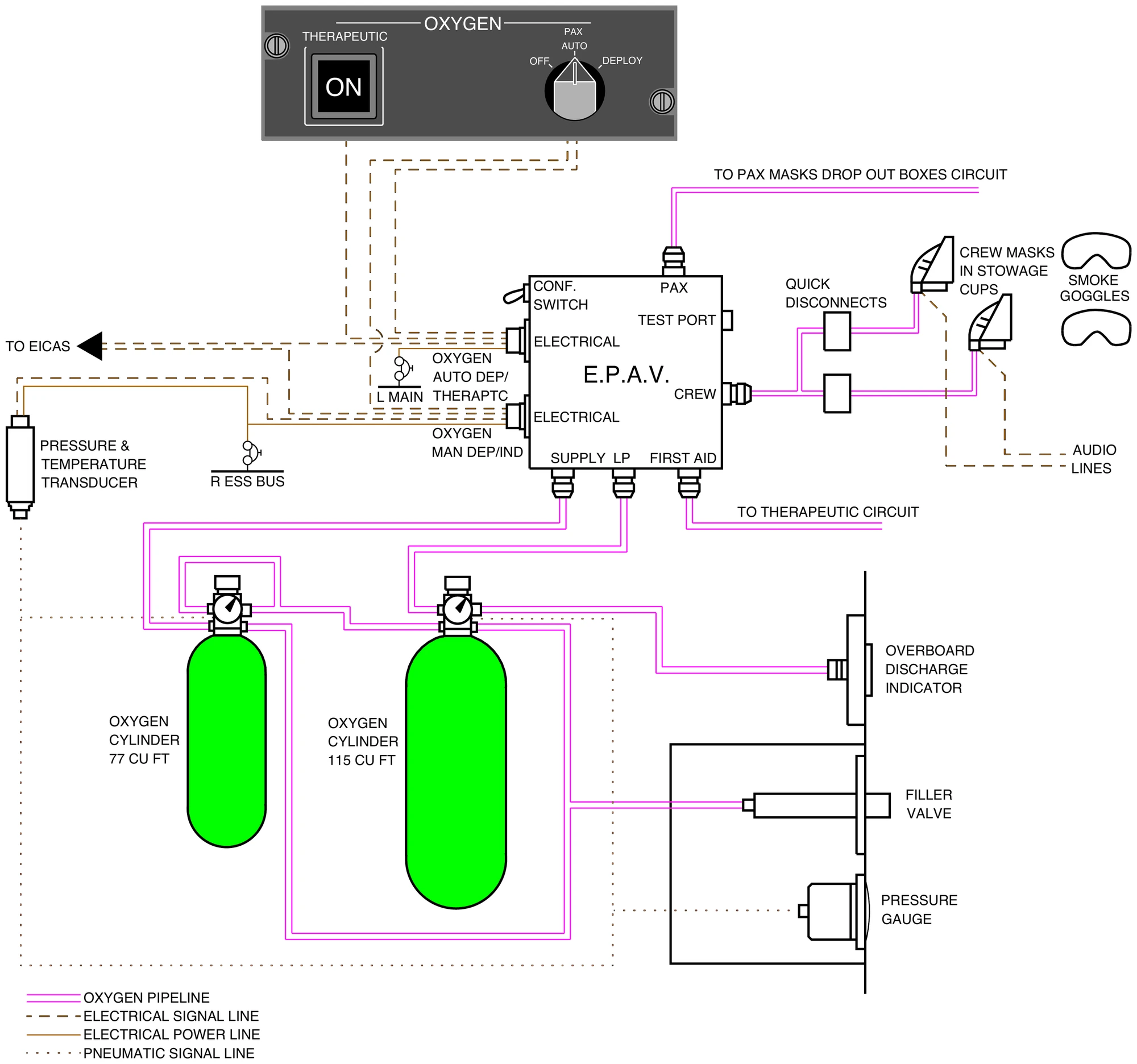
- Oxygen is kept as a gas at high pressure in two composite cylinders, in their own compartment on the right side of the lavatory section.
- Each cylinder has a regulator on top with a manual on/off toggle. It brings the pressure down to what the masks and the therapeutic outlet need.
- The reduced-pressure oxygen goes to the EPAV (electrical pneumatic actuating valve). It feeds the crew masks, the passenger mask boxes and the therapeutic circuit, and it meters the passenger flow so less oxygen is used.
- A transducer reads cylinder pressure and compartment temperature. The EPAV turns that into a temperature-compensated signal, and the quantity shows in liters on the EICAS and the SUMMARY page.
- If the pressure gets too high, a relief valve dumps the cylinder overboard. The green overboard discharge indicator above the service panel, on the right side, is then ruptured or missing.
- The service panel, with the filler valve and a pressure gauge, is on the right fuselage just forward of the right engine. Refilling is a maintenance job.
| Small cylinder | 77 cu ft (2,183 liters) |
|---|---|
| Large cylinder | 115 cu ft (3,256 liters) |
| System pressure, fully charged | 1,850 psi |
| OXYGEN QUANTITY LOW, readout amber, below | 700 liters |
Crew masks
Quick-donning masks and smoke goggles
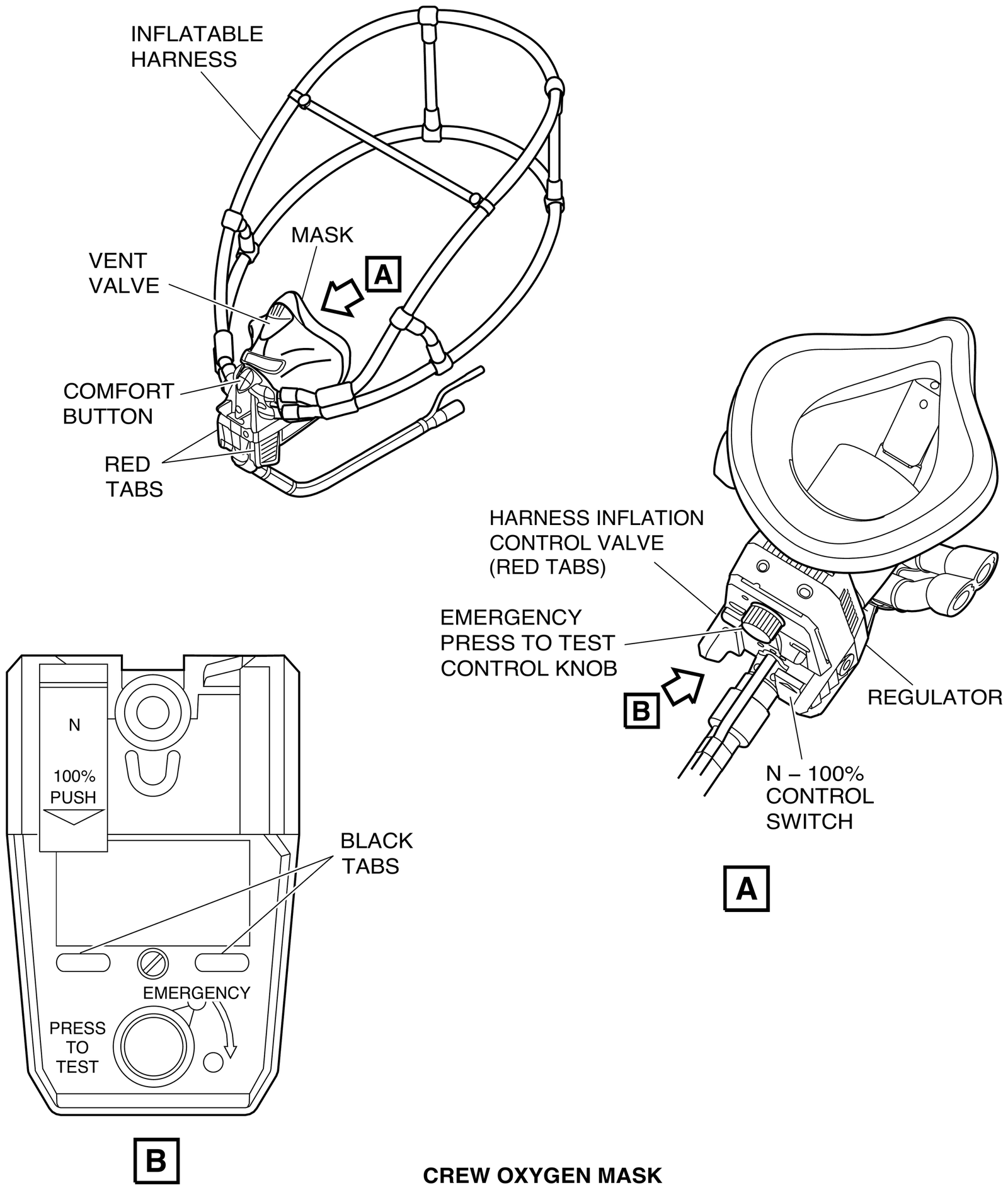
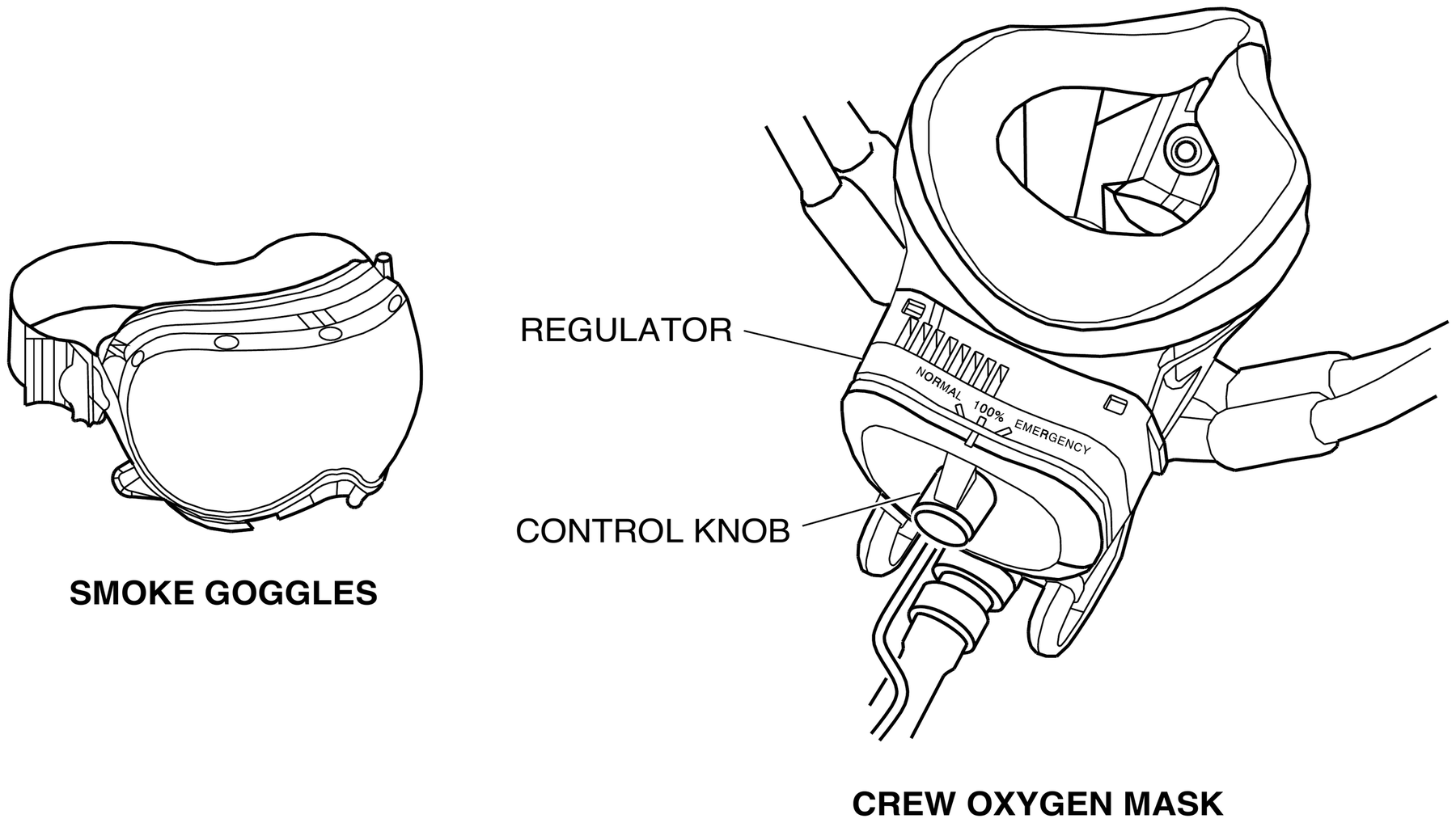
- Each pilot has a quick-donning mask in a stowage cup over the outboard shoulder. It carries its own regulator, an inflatable harness and a microphone.
- Squeeze the red tabs and pull: the harness inflates as the mask comes out. Let go and it deflates, holding the mask tight on the face. Getting it on in five seconds takes training and a mask that was stowed properly.
- The mask microphone goes live with O2 MASK/NORM on the audio control panel set to O2 MASK.
- When stowing, never push the harness into the nosepiece cavity. It slows down the next donning.
- Keep the vent valve closed unless the goggles are on. Opened, it blows oxygen into the goggles to keep smoke out and the lens clear.
- Both pilots have smoke goggles, in bags on the side console outboard of each seat. They fit over glasses or sunglasses.
- The masks only have to work at −5 °C and warmer. After a cold soak below that, the cabin may need warming before the preflight mask test.
| N (NORMAL) | Cabin air mixed with oxygen |
|---|---|
| 100% | Pure oxygen |
| EMERGENCY | Constant flow at positive pressure |
| PRESS TO TEST | A short flow of oxygen; the hose flow indicator changes colour |
| Cabin altitude above 35,000 ft | Pure oxygen at constant flow, whatever the knob position |
Passengers
Passenger and therapeutic oxygen
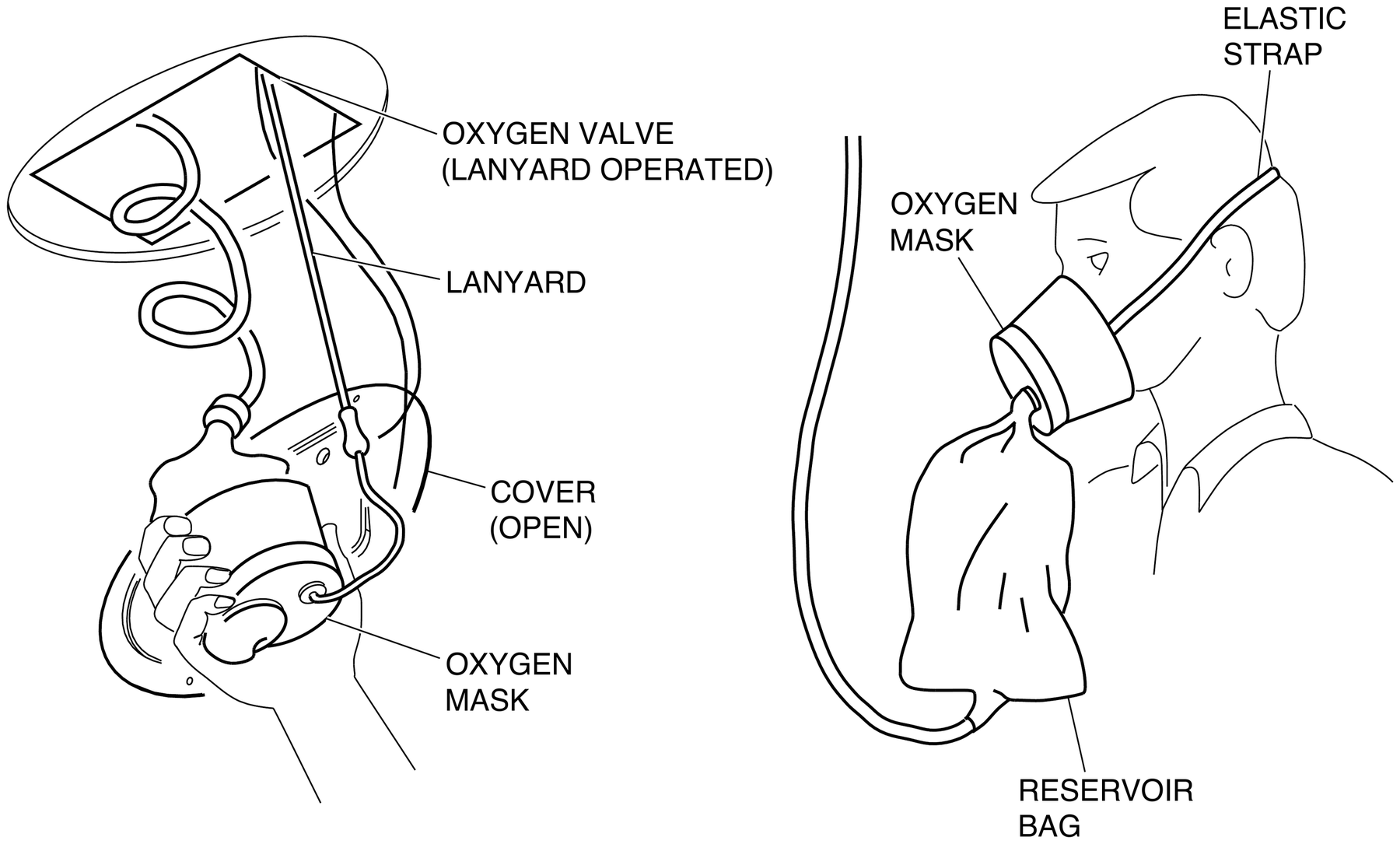
- Passengers breathe from the same two cylinders as the crew.
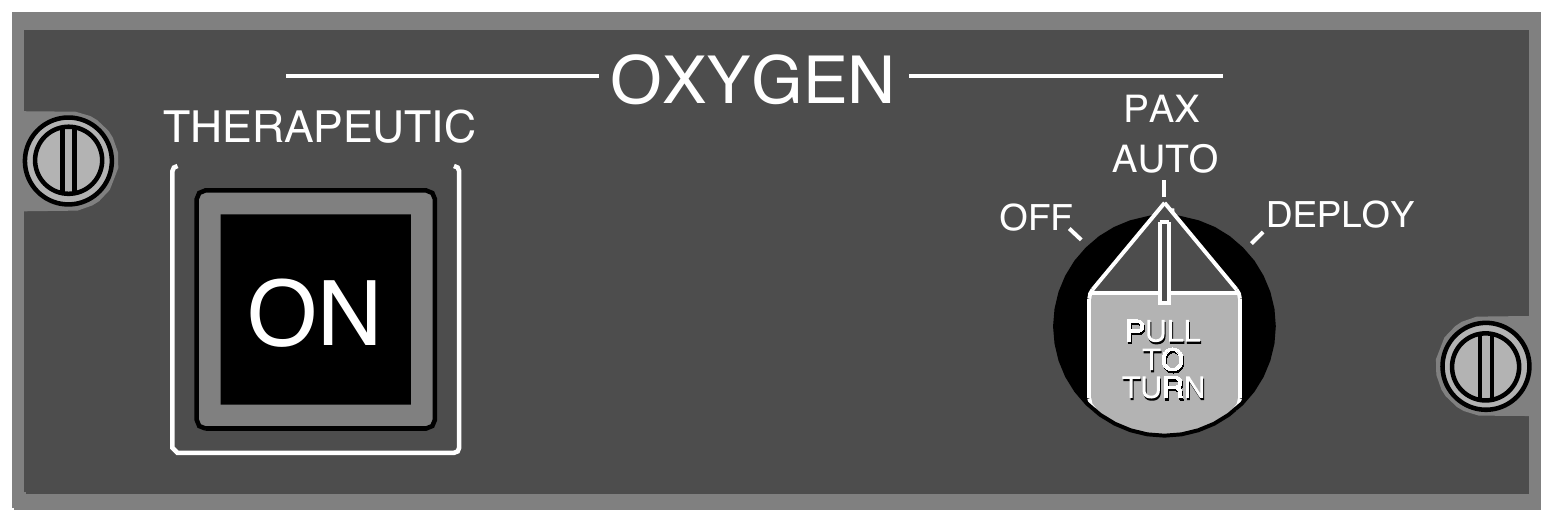
- The PAX switch on the OXYGEN panel has three positions: OFF, AUTO and DEPLOY. Pull its knob to turn it.
- Mask boxes are fitted above each pair of passenger seats, with one more on the lavatory bulkhead. The latch releases electrically or by hand, the door opens and the masks drop.
- Passengers pull the mask toward them, which pulls the lanyard and starts the flow, then wear it over nose and mouth with the elastic strap. The green part of the bag inflates when oxygen is flowing.
- Therapeutic oxygen is low pressure, from an outlet about halfway down the cabin on the right. The THERAPEUTIC switch on the OXYGEN panel controls it.
| AUTO | Masks drop if the cabin climbs to 14,500 ft ±500 ft. Oxygen keeps flowing until the cabin is back below 9,500 ft ±500 ft. |
|---|---|
| DEPLOY | Opens the passenger oxygen valve: the masks drop at any cabin altitude |
| OFF | No oxygen to the passenger system, whatever the cabin altitude |
Before flight
Preflight, limits and duration
- Walkaround: check the oxygen quantity, and check the overpressure relief indicator and the service door, then close the door.
- Before engine start: check the crew masks and smoke goggles, and set PAX OXYGEN to AUTO.
- Test the THERAPEUTIC OXYGEN switch (ON light, then OFF) only when the flight needs a mission completion altitude above 10,000 ft after a pressurization failure.
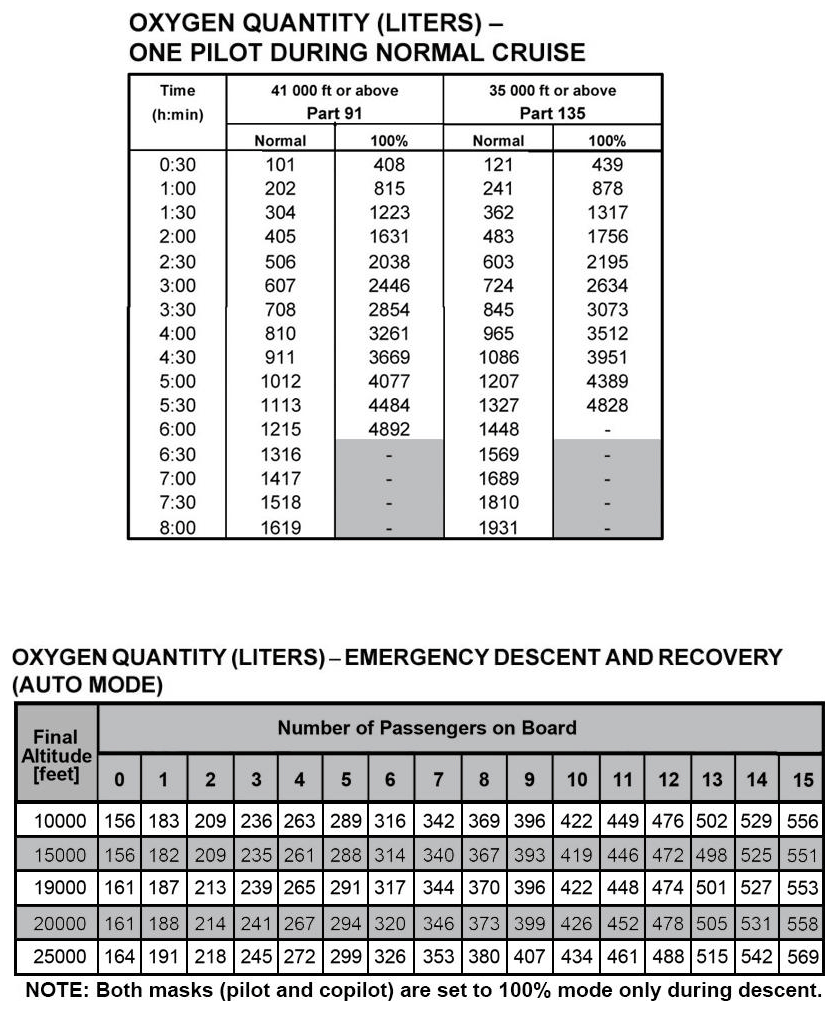
- Plan enough oxygen for everyone on board in case pressurization fails: Q Total = Q Normal Cruise + Q Descent and Recovery + Q Final Altitude. Q Total must stay above Q Minimum and below the quantity displayed; if it does not, the system needs servicing.
- The tables cover one pilot in cruise above FL350 or FL410 (mask at Normal or 100%), the descent and recovery by number of passengers, and the time left at the final altitude.
- Only the descent and recovery and the final altitude tables come in an AUTO and a DEPLOY version. AUTO meters the flow and makes the oxygen last longer. The DEPLOY tables let you plan and dispatch with AUTO failed: the flow is higher, so the oxygen runs out sooner.
| Q Minimum | 700 liters |
|---|---|
| Crew and passenger masks, highest cabin altitude for use | 40,000 ft |
| Passenger masks, long use not recommended above | 25,000 ft cabin altitude |
| Prolonged operation may cause decompression sickness above | 20,000 ft cabin altitude |
Emergency equipment
Extinguisher, PBE, axe and life vests
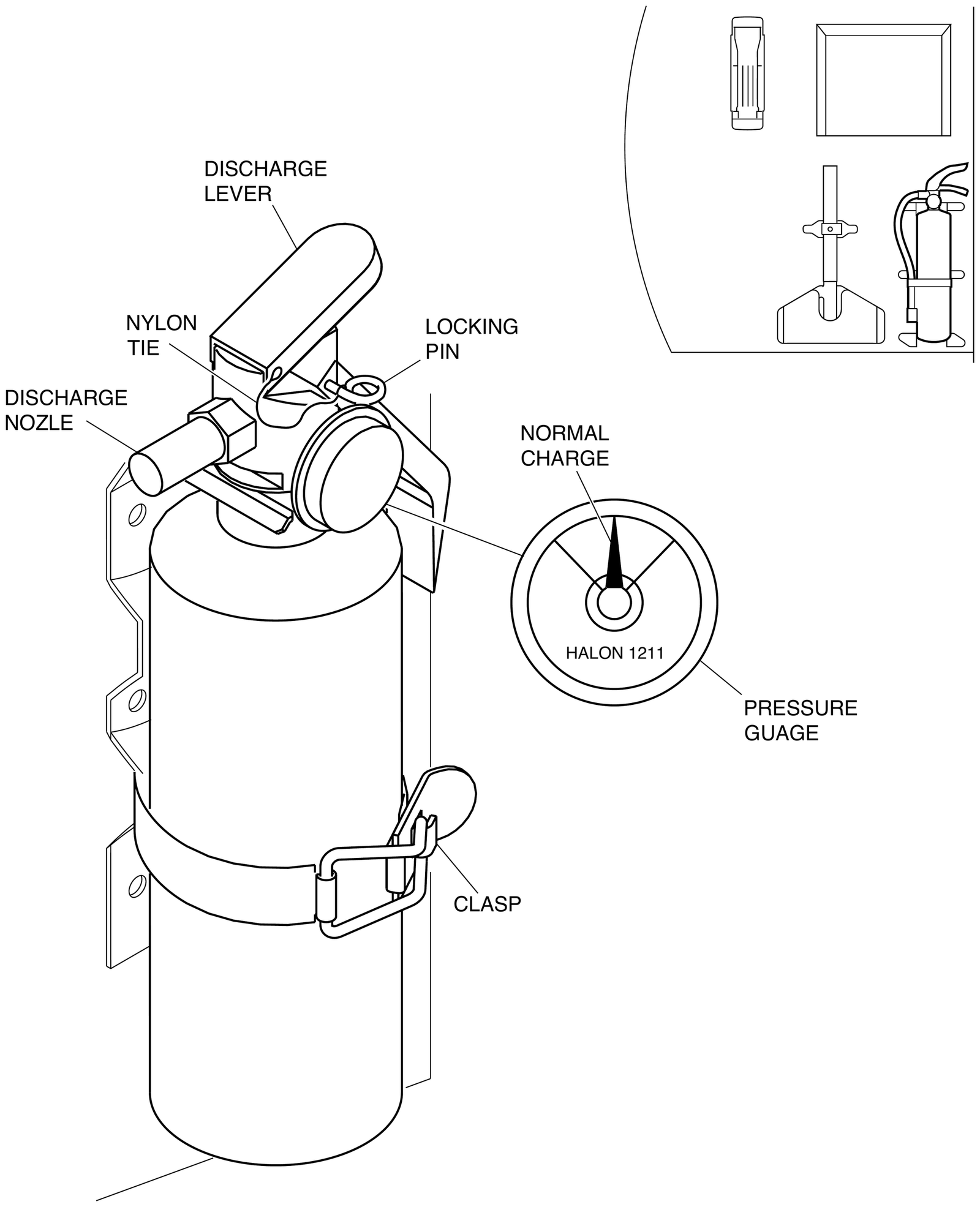
- The flight deck extinguisher holds Halon 1211. It works on Class A, B and C fires and is fine in cold weather. Hold it upright, slide the locking pin down, aim at the base of the fire and press the lever. Held on, it empties in 10 seconds.
- After using it on the flight deck, both pilots put their masks on with EMERGENCY selected: Halon vapour brings dizziness and slows thinking. Ventilate once the fire is out.
- The PBE (protective breathing equipment) is a hood with a visor that seals at the neck. A chemical canister makes the oxygen. It protects the eyes and lungs of a crew member fighting a cabin fire.
- Its oxygen lasts nominally 15 minutes, depending on work rate and the size of the user. Once started, the hood fills over 15 to 20 seconds.
- It stays vacuum sealed; a broken seal means a replacement. Sealed life is 10 years. It gives off oxygen, so keep it away from flame and take it off only in a safe area clear of fire.
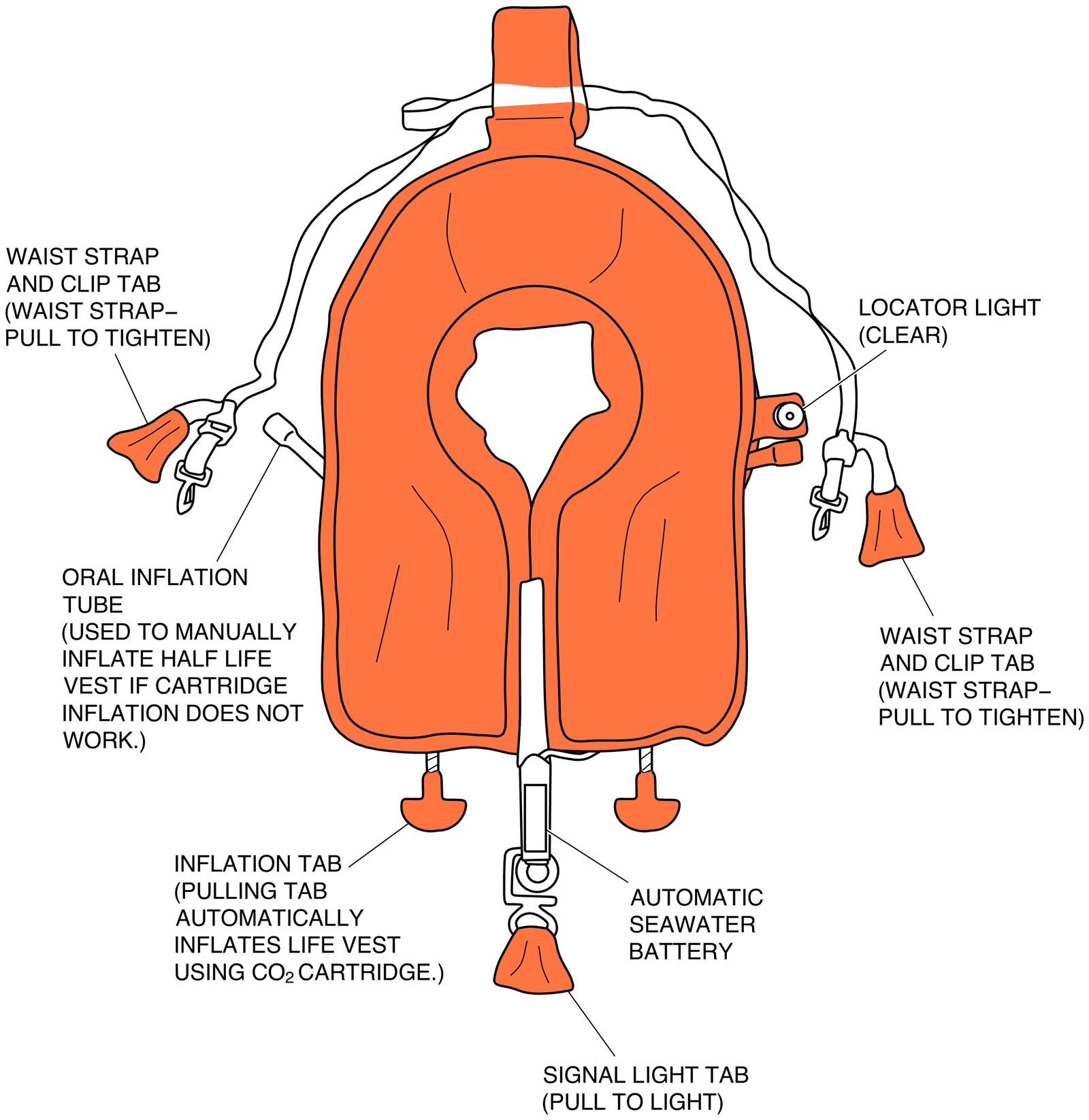
- Life vests inflate with the red CO2 tabs, with an oral tube as backup. Inflate just before leaving the airplane, or once out on the wing at an overwing exit.
- Two 4-person life rafts are optional; where they are stowed depends on the cabin layout.
| Flight deck | 2 flashlights, 1 PBE, 1 crash axe, 1 fire extinguisher, 2 life vests |
|---|---|
| Cabin | 1 first aid kit, 2 fire extinguishers (lavatory and forward closet), 1 PBE, a life vest under each seat |
| PBE | Behind the pilot's station near the floor, and in the lavatory |
| Crash axe | Bulkhead behind the copilot seat |
| Crew life vests | Under the pilot and copilot seats |
| Flashlights | Behind both pilot seats, below the circuit breaker panels |
When it goes wrong
Cautions, status messages and Immediate Action Items
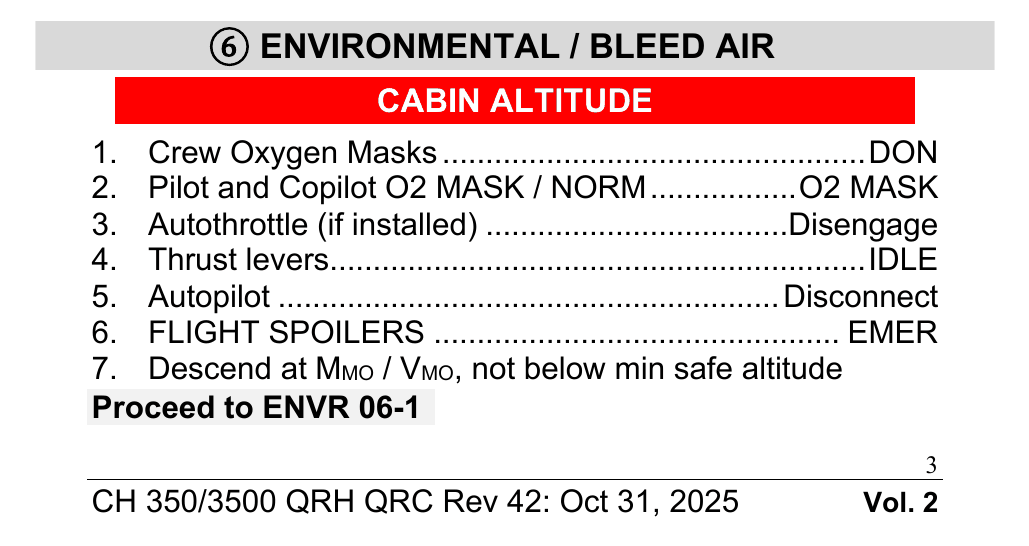
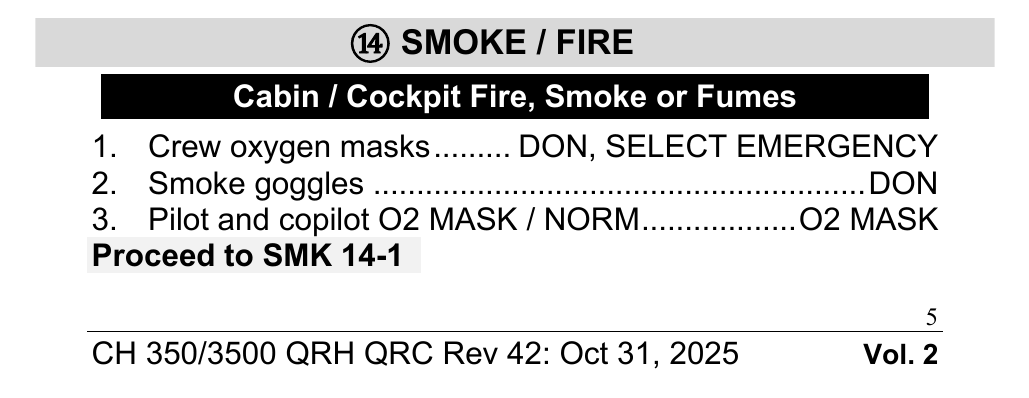
- OXYGEN QUANTITY LOW (caution): less than 700 liters on board.
- OXYGEN VALVE CLOSED (caution): the bottle valve is closed, or the number of bottles set on the EPAV does not match what is installed. Normally a ground message; in flight it comes with OXYGEN QUANTITY LOW once the bottles are empty.
- PAX OXYGEN AUTO FAIL (caution): PAX switch in AUTO and cabin above 15,000 ft, but the masks have not dropped or the passenger lines are not pressurized.
- PAX OXYGEN ON (status): pressure in the passenger oxygen lines, so the masks are out. PAX OXYGEN OFF (status): the PAX switch is at OFF.
- OXYGEN QUANTITY LOW or OXYGEN VALVE CLOSED still on after the procedure: no go.
- Pilots put their own masks on first, then check the passengers' condition and provide assistance.
The full module
The slides go through the cylinders and the EPAV, the crew masks and goggles, passenger oxygen, preflight and duration planning, the emergency equipment and the abnormals, then a short test.
Open the slides