Lighting
The LIGHTING panel on the centre pedestal works the exterior lights, the passenger signs and the emergency lights. Two side panels dim the flight deck.
Open the slidesThe switches
LIGHTING panel and exterior lights
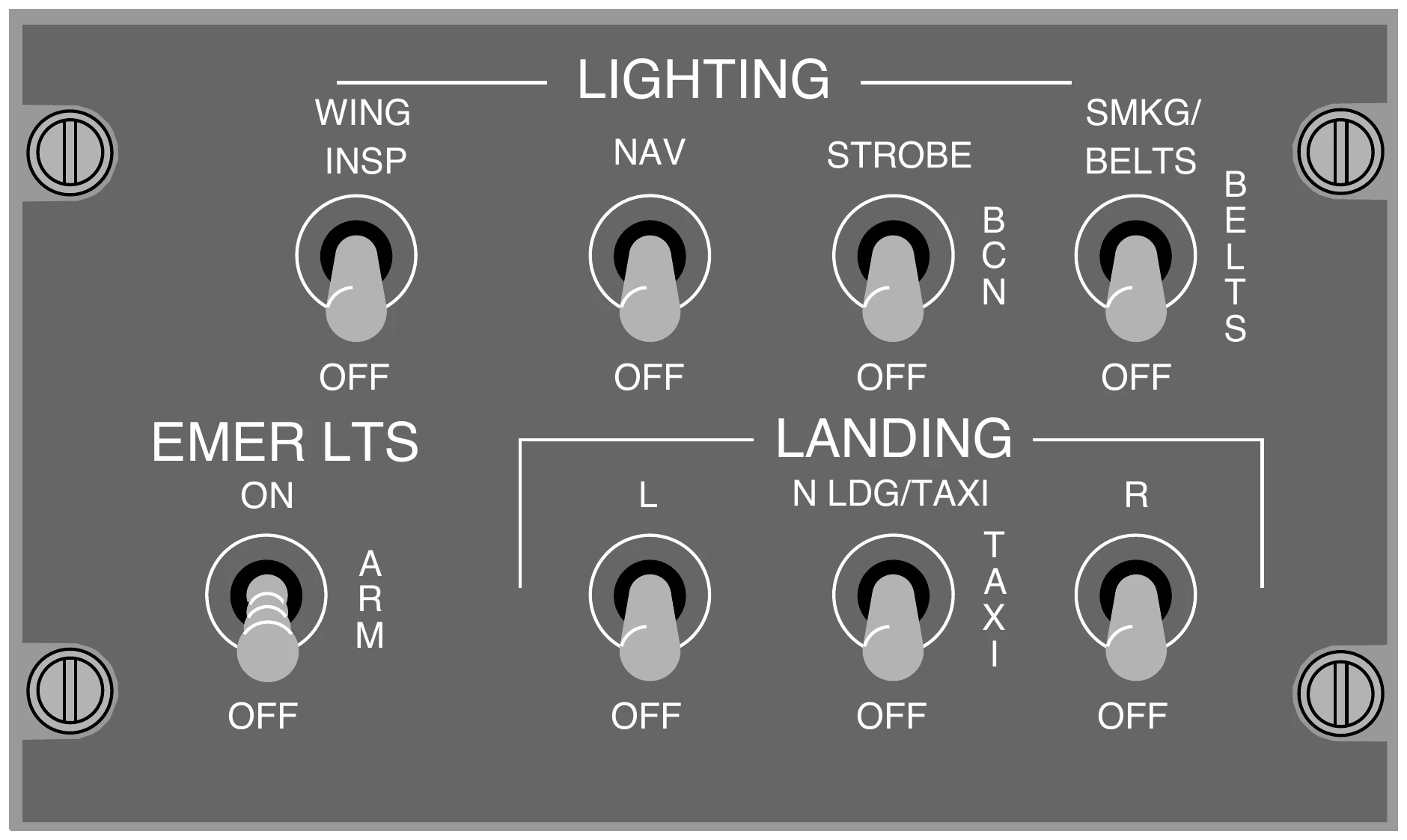
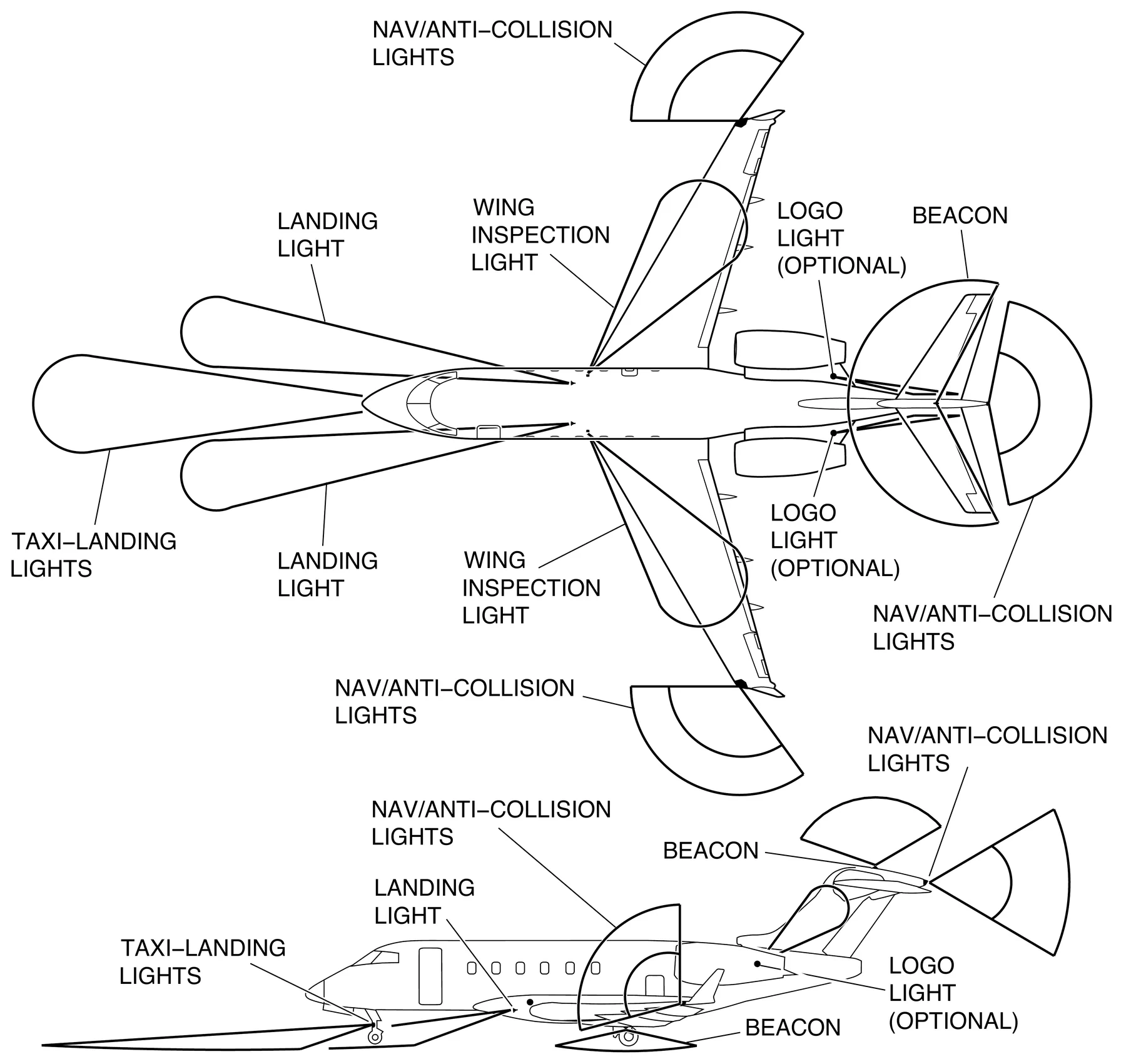
| WING INSP | Lights on both sides of the fuselage, to check the wing for ice. |
|---|---|
| NAV | Wing tip and tail navigation lights. With the optional logo lights it is a three-position NAV/LOGO switch. |
| STROBE / BCN | BCN for the red beacons, STROBE for the white anti-collision strobes. Red is meant for the ground: it is dimmer and is no backup anti-collision light. The FDR starts as soon as the switch leaves OFF. |
| L and R LANDING | The two HID landing lights in the wing-to-body fairing. |
| N LDG/TAXI | TAXI: taxi light only. N LDG/TAXI: both nose gear lights. They work only with the gear down and locked. |
| SMKG/BELTS | Passenger signs: OFF, BELTS, SMKG/BELTS. |
| EMER LTS | Emergency lights: OFF, ARM, ON. |
- The left and right COCKPIT LIGHTS panels dim the flight deck in four zones: pilot side, centre pedestal, copilot side and circuit breaker panels.
- The DOME knob is on the right COCKPIT LIGHTS panel; turned counter clockwise past DIM it switches the dome light off. The dome light runs on the 28 V DC Right Essential Bus.
- If left main bus power to the cockpit lights is lost, the lights of the standby compass, standby instrument and clock move to the right essential bus by themselves.
When the power goes
Emergency lights and CAS
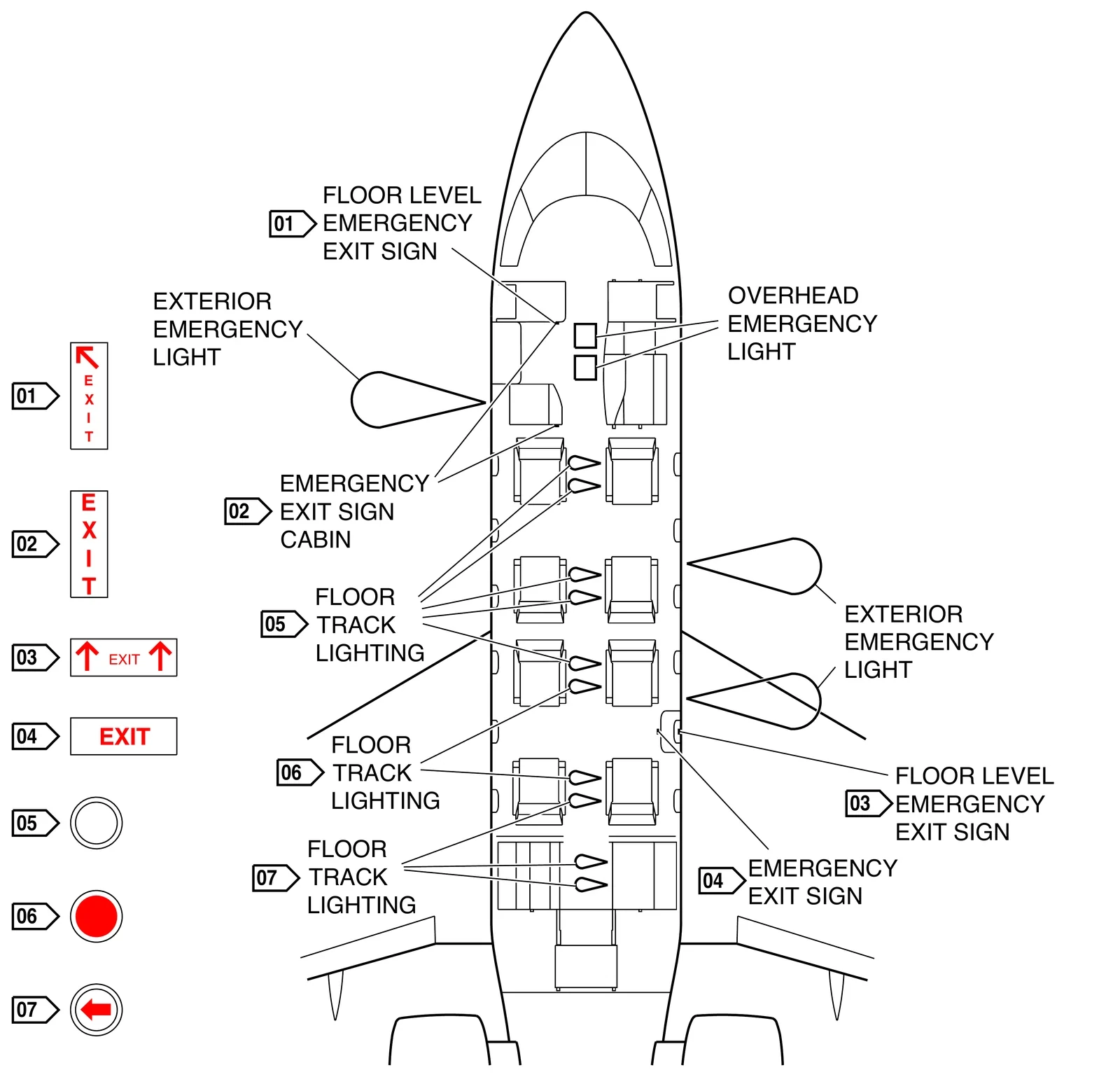
- Exit signs, ceiling and floor floodlights, and exterior emergency lights that light the area around the aircraft. Two independent rechargeable battery packs power them for 15 minutes. The system is designed to last at least 10 minutes in critical conditions such as low temperature.
- At ARM, all interior and exterior emergency lights come on by themselves when 28 VDC R MAIN BUS power is lost, which means all generated power is gone.
- At ON, the lights come on and the amber EMER LIGHTS ON shows.
- At OFF, with the battery switch ON, EMER LIGHTS OFF shows.
- The emergency lights are checked on the first flight of the day in the Before Starting Engines checklist and left at ARM. ARM is also a through-flight item. EMER LTS goes OFF at shutdown.
- With main power generation lost in flight and only battery power left, the external lights and the cabin lights other than the dome light are lost. The emergency lights have their own battery packs.
| EMER LIGHTS OFF (caution) | The emergency lights are off when they should be armed. Inhibited for takeoff and landing. |
|---|---|
| EMER LIGHTS ON (caution) | The cabin emergency lights are on. Inhibited for takeoff. |
The full module
The slides cover each control, the lights you use on a normal flight and the abnormal procedures that call for them. A 10‑question test closes the module.
Open the slides