Landing gear and brakes
Tricycle gear moved by the left hydraulic system, carbon brakes with anti-skid on the main wheels, and steer-by-wire nosewheel steering.
Open the slidesHow it moves
Gear and steering
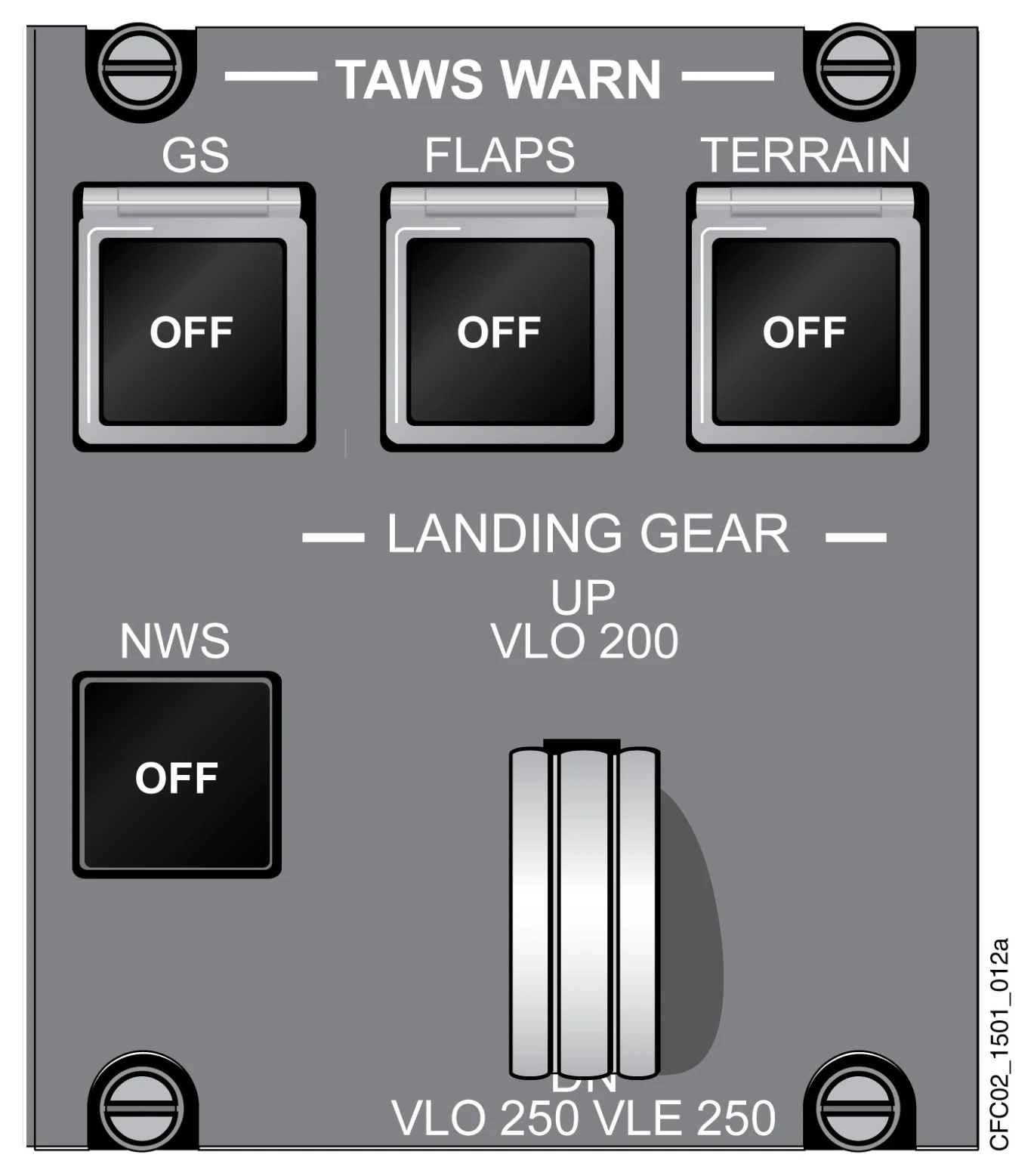
- Two main gears and a steerable nose gear, with twin wheels on each.
- The left hydraulic system moves the gear. The main gears retract inward and the nose gear forward.
- The PSEU reads the LANDING GEAR handle, the proximity sensors and weight on wheels, then drives the selector valve.
- During retraction the BCU holds 350 psi on the brakes for 4 s, so the main wheels stop spinning before they enter the bay.
- After takeoff the PSEU disarms the normal brakes and the nosewheel steering. The steering re-arms at touchdown.
- EICAS shows a DN icon for each gear down and locked. A red gear icon with the GEAR warning means you are landing with a gear not down and locked.
| NWS switch (LANDING GEAR panel) | Arms the steering. The switch is lit when OFF. |
|---|---|
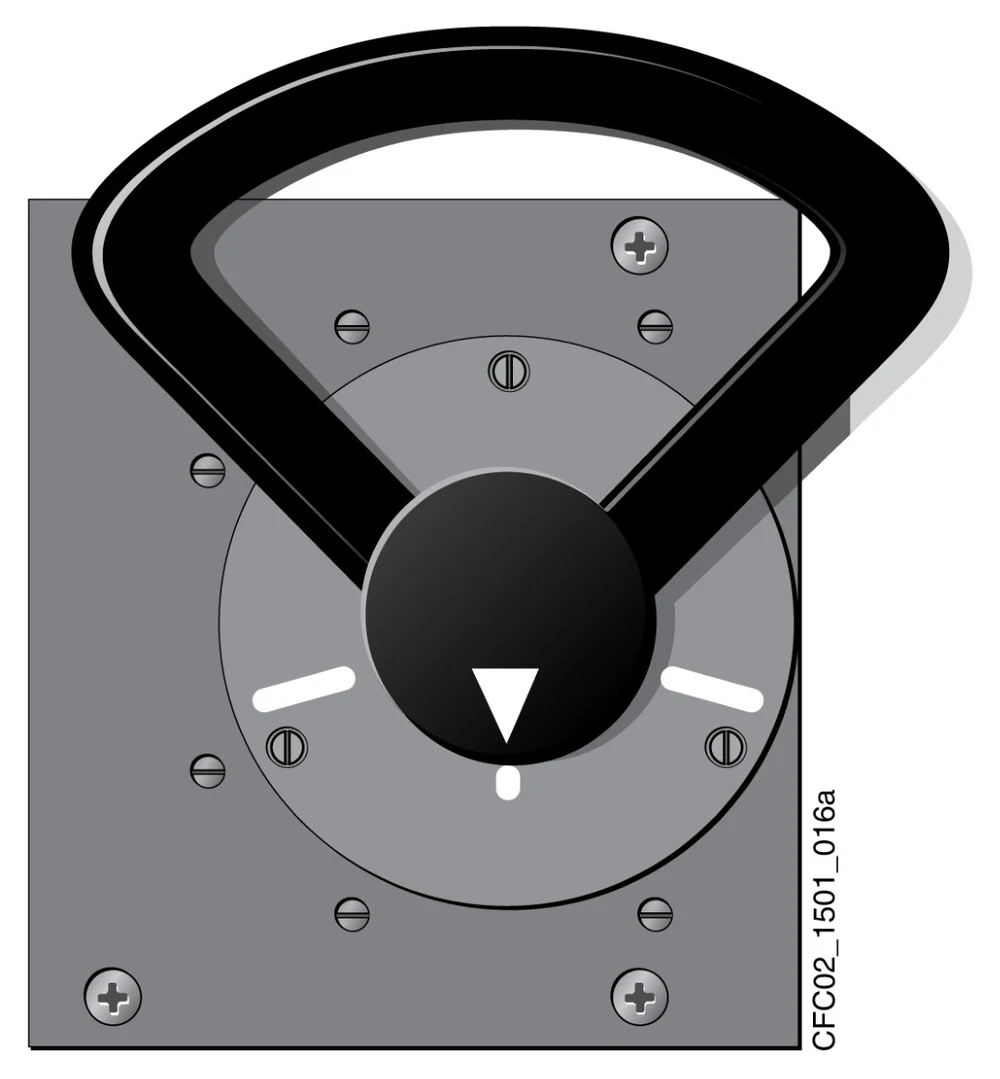
| Tiller (pilot's side panel) | Full authority, ±65° at the nosewheel |
| Rudder pedals | Limited authority, ±7° at the nosewheel |
| Steering works with | left hydraulic pressure, nose gear down and locked with weight on wheels, NWS on |
| NWS off or failed | The nosewheel casters freely. |
How it stops
Brakes and anti-skid
- Carbon multi-disc brakes on every main wheel. Left hydraulics brake the inboard wheels, right hydraulics the outboard wheels, each channel with its own electrical source.
- Both pilots have full and differential braking. The BCU uses whichever pedal input is greater.
- The brakes arm when the gear is selected down or ground mode is detected.
- Anti-skid works on each main wheel down to 10 kt, with touchdown and locked-wheel protection.
- Each main wheel has four fusible plugs. They melt if the wheel gets too hot and let the tyre deflate before it can burst.
- An overheat loop in each main wheel bin triggers GEAR BAY OVHT.
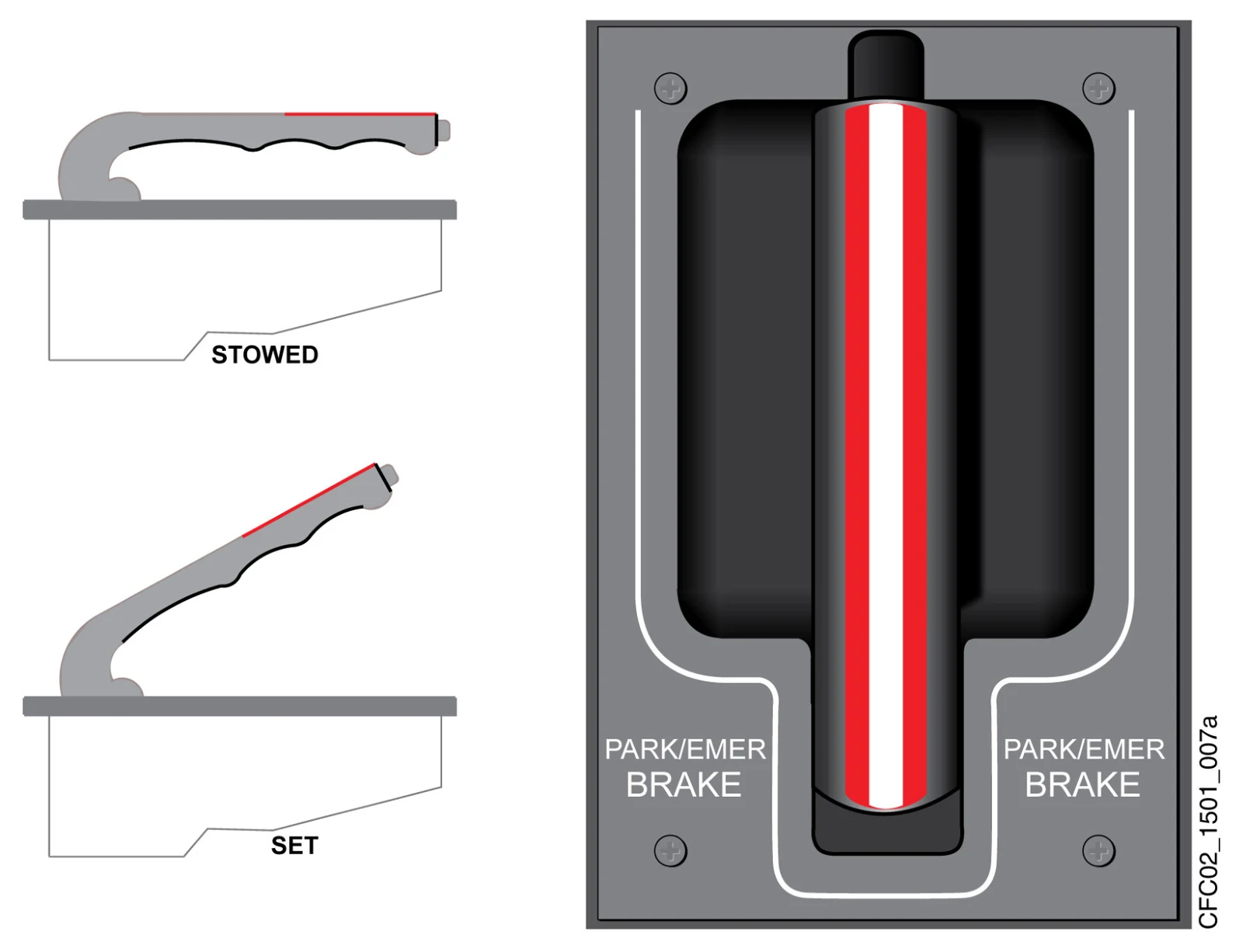
| Handle (centre pedestal) | Pull up until it latches to park. To release, pull up, press and hold the button, and let it go down. |
|---|---|
| Used for | Parking, or braking when the normal brakes are inoperative |
| What it brakes | All four main wheels, with no differential braking and no anti-skid |
| Accumulator (left hydraulic system) | Extended parking, or at least 6 emergency brake applications |
| INBD BRAKE PRESS LO | Inboard accumulator below 1,400 psi |
| OUTBD BRAKE PRESS LO | Outboard accumulator below 1,400 psi |
| PK/EMER BRK PRESS LO | Below 1,200 psi: not enough for full PARK/EMER BRAKE. Normal brakes still work. |
What not to exceed
Limits and abnormals
| VLO, retraction | 200 KIAS |
|---|---|
| VLO, extension | 250 KIAS |
| VLE | 250 KIAS |
| Gear extension | prohibited above 18,000 ft |
| Tyre speed | 182 kt ground speed maximum |
| Towing, torque links connected | 120° either way at the nose gear. Beyond that: NWS LIMIT EXCEEDED and possible damage. |
| Brake cooling | observe the cooling times between a landing or RTO and the next takeoff |
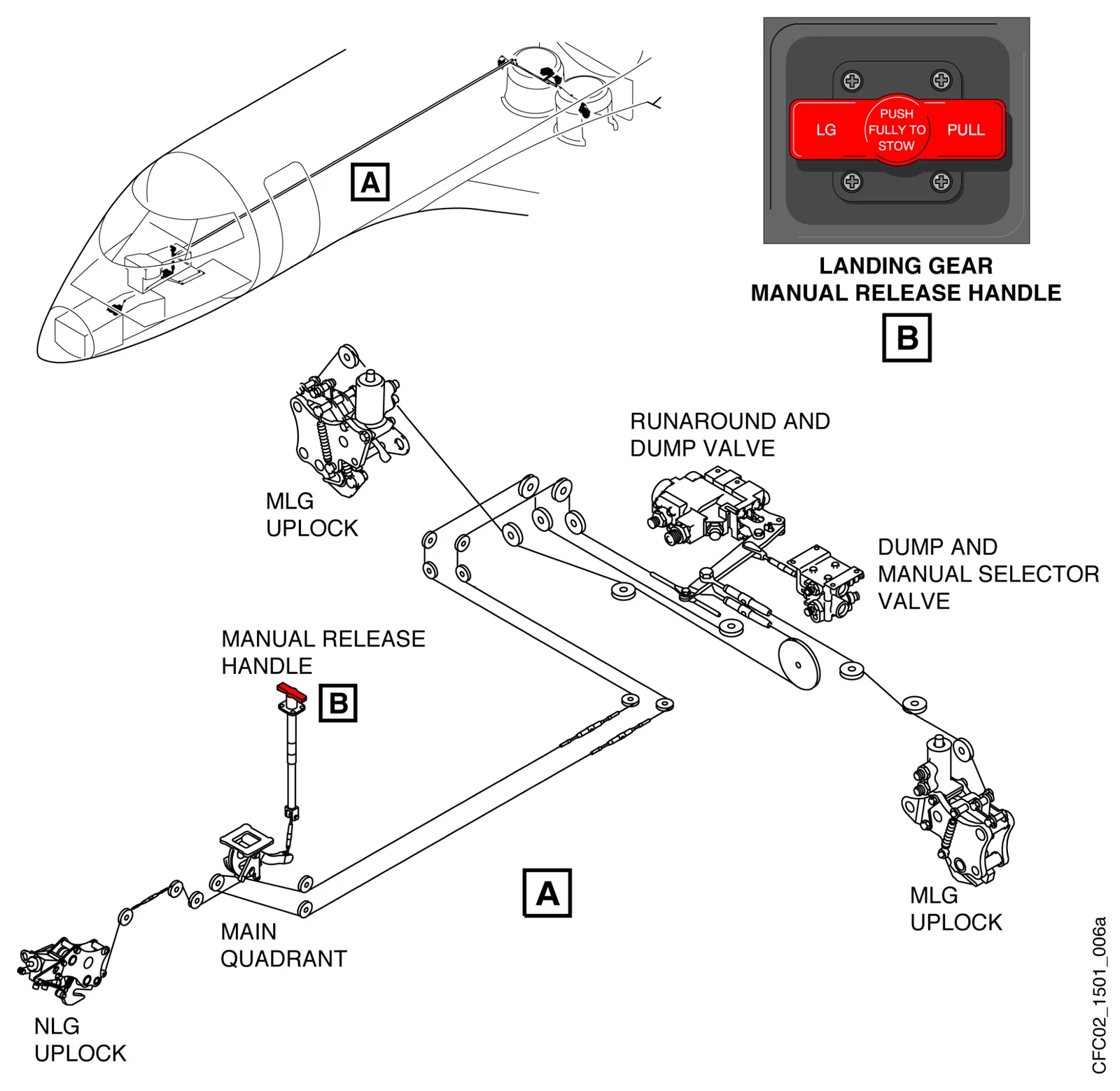
- Alternate extension: the LG PULL handle, at the rear of the centre pedestal on the copilot's side, releases the uplocks. It works after a gear control or left hydraulic failure.
- The nose gear falls by gravity and springs. The main gears fall by gravity, and right hydraulic pressure, backed by an accumulator, helps them into their downlocks.
- GEAR DISAGREE: a gear is still in transit after 28 s, or does not match the handle.
- GEAR SYS FAIL: the gear control has failed completely. Gear, door and spoiler indications may be lost.
- NORM BRAKES FAIL, with the aural "NORMAL BRAKES FAIL": all normal pedal braking is lost.
The full module
The slides take you through the gear, steering, brakes and the abnormals, then a 10-question test.
Open the slides