Challenger 350 wingtip hits a lamppost while parking at Dundee, 2023
BulletinMarshallingDay
The short version
LN-JHH landed at Dundee in clear daylight and was marshalled onto Stand 1B with another aircraft already on the next stand. The marshaller brought it too close to the edge of the apron and the left winglet hit a lamppost. Two wing spotters saw it coming and signalled stop 4 seconds before the impact, but the marshaller was watching the aircraft and the crew were watching the marshaller.
What happened
The aircraft lands on runway 27. ATC tells the crew to vacate via Taxiway B and park nose to the south on Stand 1B, with a marshaller. It is daytime and CAVOK.
A marshaller stands at the head of Stand 1B. Two wing spotters stand at the end of the apron. Stand 1A, next door, already has an aircraft on it.
The crew follow the marshaller's signals onto the stand. The aircraft gets close to the edge of the apron, where a row of lampposts stands.
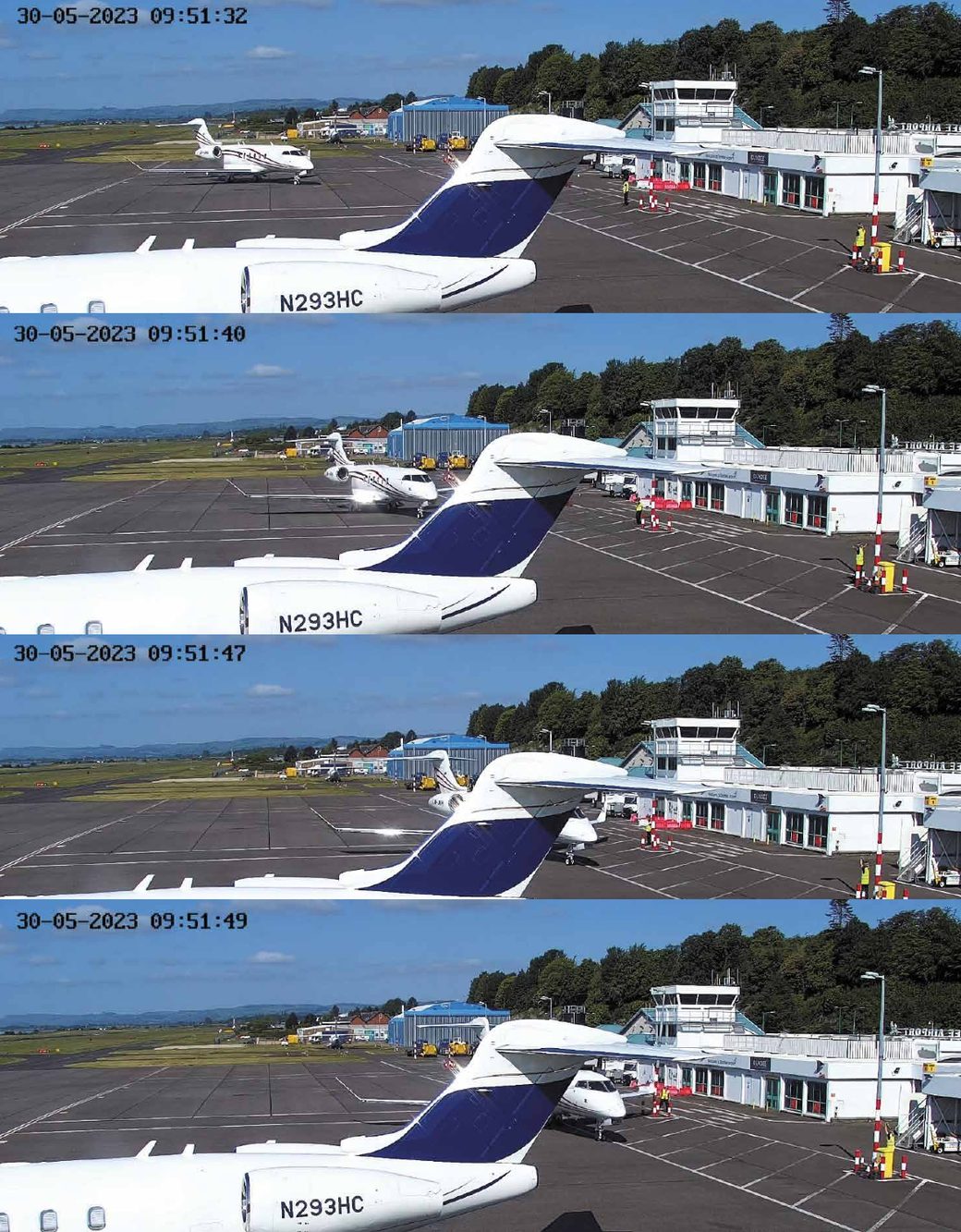
Four seconds before the impact, both wing spotters see the collision coming and start signalling stop, as the airport CCTV later showed. The marshaller is looking at the aircraft. The crew are looking at the marshaller. Nobody sees the stop signal.
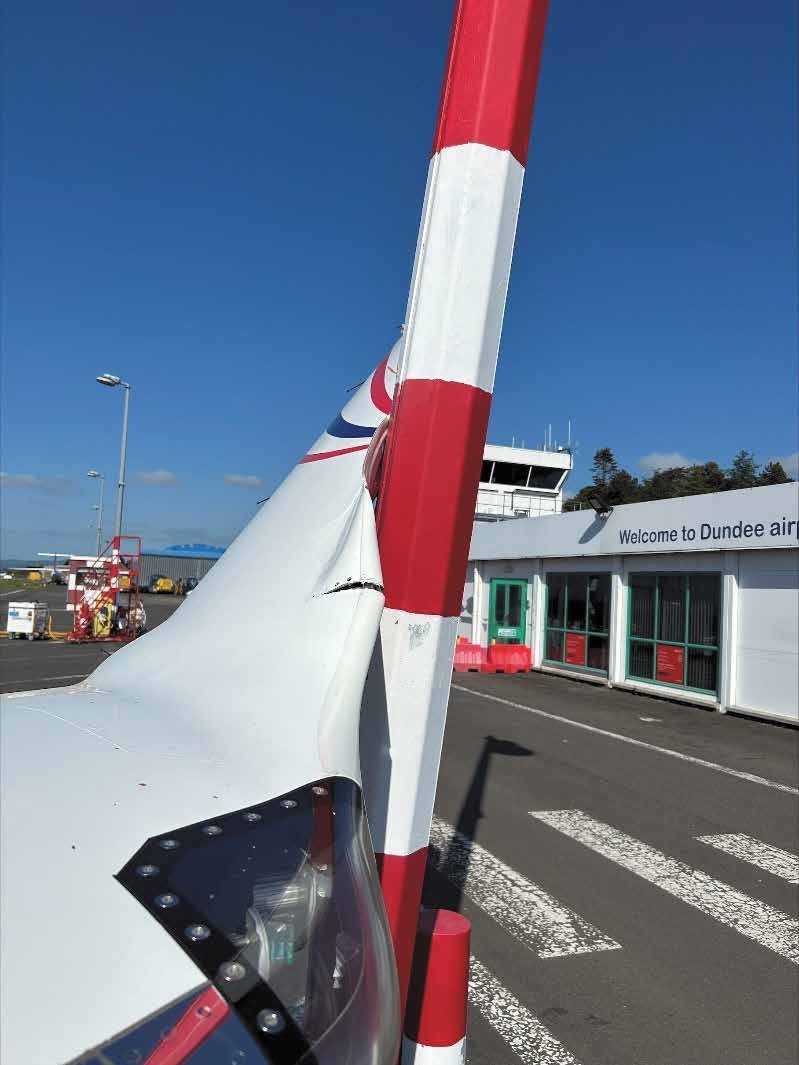
The left winglet hits a lamppost on the edge of the apron. The aircraft stops abruptly.
All times are UTC. Local time was UTC+1 (BST).
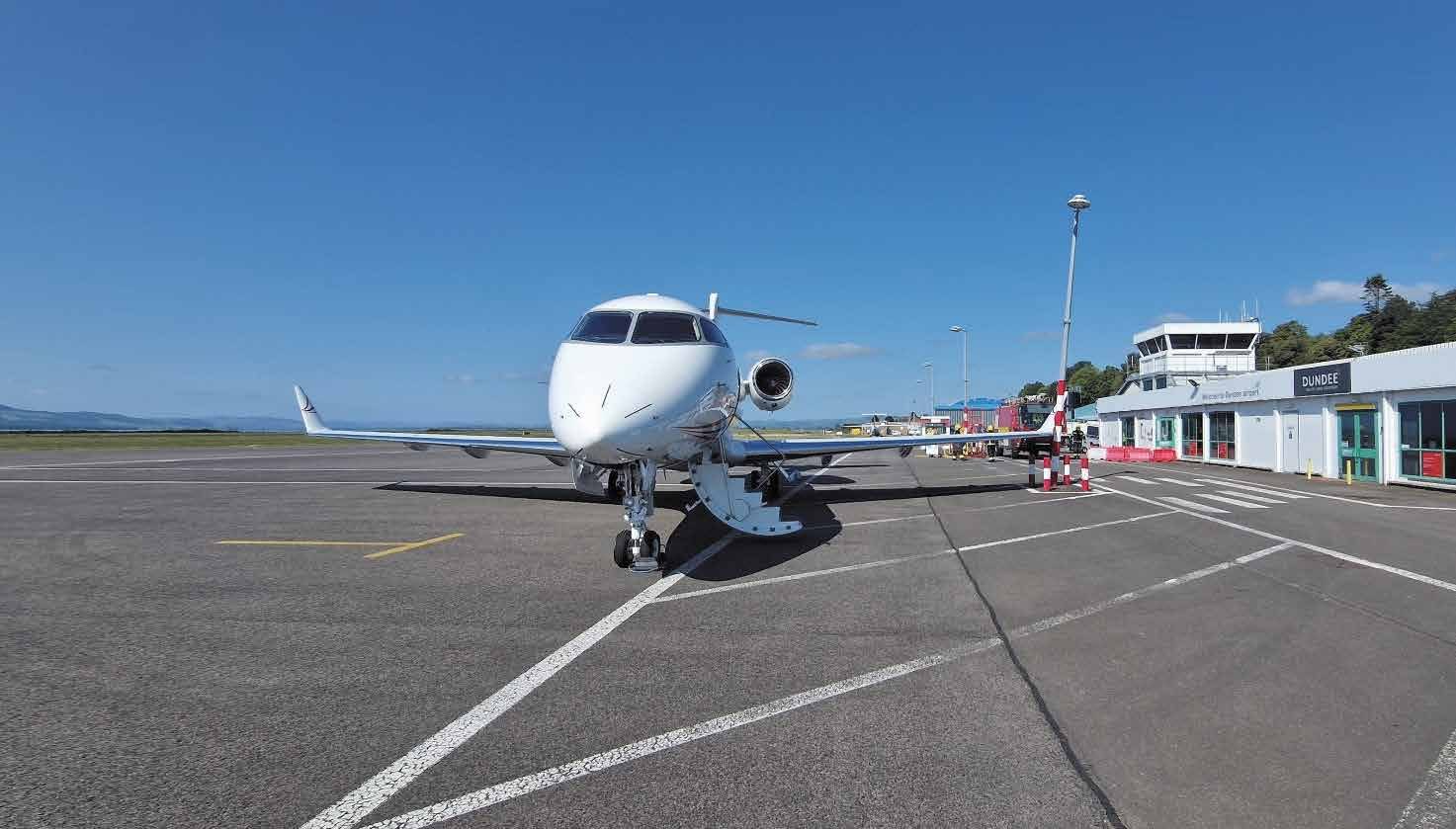
At the top of the apron is a white hatched area. It is a safety buffer, and no part of an aircraft should enter it while manoeuvring. The lampposts stand on the edge of the apron, and the wing spotters stood in line with them. The wing spotter nearer the lamppost was hidden from the marshaller by the aircraft itself. From the head of the stand, it would have been hard for the marshaller to judge how close the far wingtip was to the lampposts.1
The commander held an ATPL and had about 8,100 hours, 700 of them on type. He said the sweep of the wing makes wingtip clearance hard to judge from the flight deck.1
Why it happened
The bulletin found that the marshaller guided the aircraft too close to the edge of the apron. He did not see the wing spotters' stop signals because he was watching the aircraft. The crew did not notice that the wingtip was too close to the lamppost, and their attention was on the marshaller, so they also missed the stop signal.1
The AAIB's conclusion is that the collision happened because neither the flight crew nor the marshaller noticed that the aircraft was too close to the lamppost. The wing spotters, placed there to prevent exactly this, could not stop it.1
The airport operator intends to have wing spotters stand on the outer edge of the buffer zone, not in line with the lampposts. It will review its marshalling training and consider direct headset contact between the marshaller and the wing spotters. In similar situations it will consider a two-stage process with two marshallers. The aircraft operator issued an Operational Order to its pilots about standard marshalling signals.1
What a crew can take from it
Wingtip clearance is hard to judge from the flight deck. The commander said the wing sweep made the clearance hard to judge, and nobody on board noticed how close the wingtip was. The bulletin says the marshaller, at the head of the stand, would also have found the far wingtip hard to judge.
A stop signal only works if someone sees it. Both wing spotters signalled stop 4 seconds before the impact. The marshaller was watching the aircraft and both pilots were watching the marshaller, so nobody saw the signal. The wing spotter nearer the lamppost was also hidden from the marshaller by the aircraft.
Know the standard marshalling signals. After this event the aircraft operator issued an Operational Order to all its pilots about standard marshalling signals. Here the stop signal came from the wing spotters at the end of the apron.
A tight stand leaves little margin. Another aircraft was already on Stand 1A, and a row of lampposts stood on the apron edge. The airport operator intends to keep its safety buffer clear, move the wing spotters to its outer edge and consider using two marshallers in cases like this.
Study it on the course
Sources
- Air Accidents Investigation Branch. AAIB Bulletin 12/2023, Bombardier Challenger 350, LN-JHH, Dundee Airport, 30 May 2023 (AAIB-29201). Published 14 December 2023.
- AAIB, report page on GOV.UK.
Last updated 22 October 2026
For study only. Always use the approved AFM, QRH and operator procedures.